
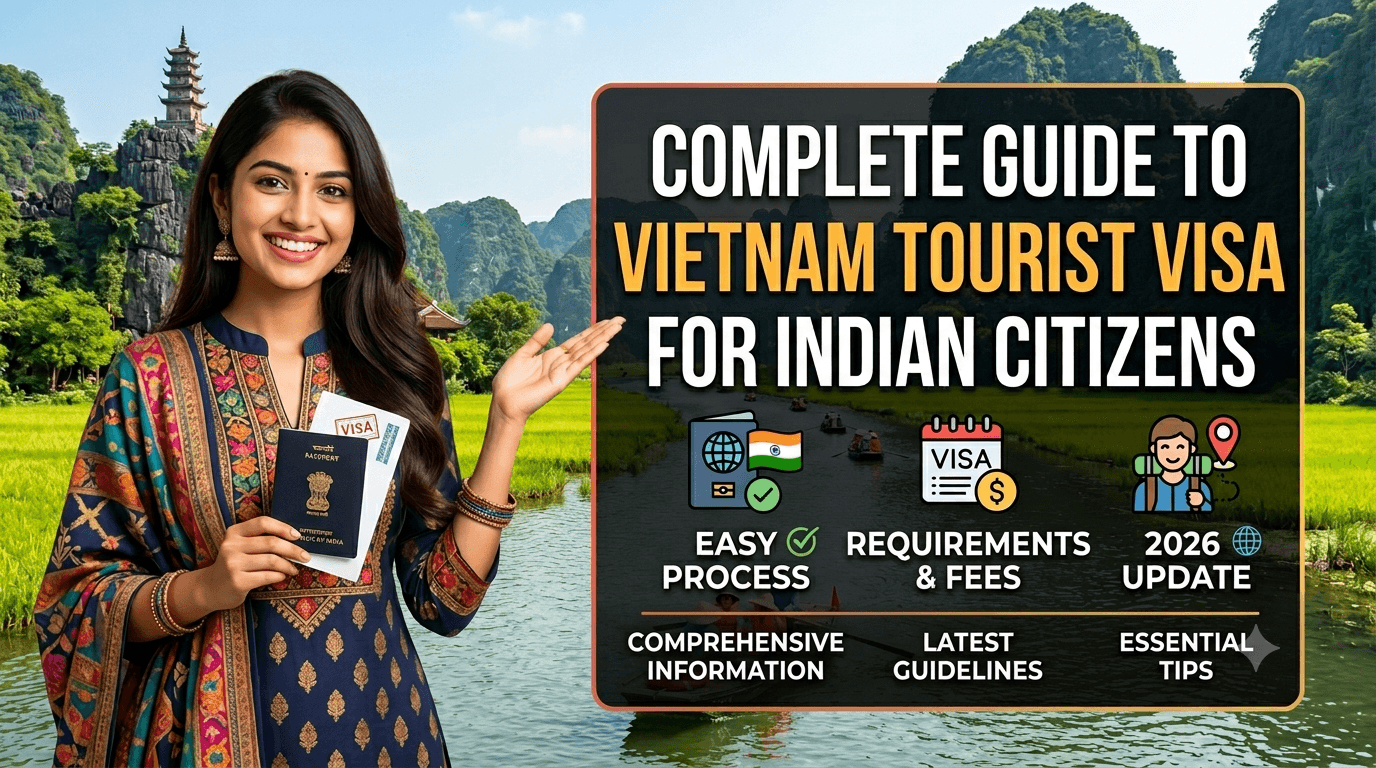
Complete Guide to Vietnam Tourist Visa for Indian Citizens
Latest update: Jun 24th, 2026
Table of Contents
Vietnam Tourist Visa For Indian is a crucial topic for Indian travelers looking to explore the picturesque landscapes, vibrant culture, and historical treasures of Vietnam. As the number of Indian tourists visiting Vietnam has been on the rise, understanding the visa application process, different types of visas, and the nuances involved is essential for a smooth trip.
Understanding Vietnam Tourist Visa For Indian Citizens
In this section, we will explore the essential information regarding the Vietnam Tourist Visa for Indian citizens, including different types of visas and their specifications.
Types of Visa Available
When it comes to securing a Vietnam Tourist Visa, Indian travelers have a couple of options to choose from, depending on their travel plans and individual preferences. The two primary types of tourist visas for Vietnam include the e-visa and the visa on arrival. Each visa type has its unique advantages and applicable requirements.
The e-visa is an electronic travel authorization that can be applied for online, making it suitable for those who prefer a hassle-free application process. The application can be submitted through the official Vietnam immigration website by uploading documents and a passport-sized photograph. Given the digital nature of this visa, travelers can receive approval quickly, typically within 3 business days. This option is ideal for Indian tourists seeking convenience and a straightforward application with less waiting time.
On the other hand, the visa on arrival is a great alternative for Indian citizens who prefer to secure their visa upon arrival at one of Vietnam's international airports. However, this option does require prior procurement of an approval letter from a valid agency before embarking on the journey. Applying for this letter is simple and can be done online, which allows you to skip long queues at the airport. Yet, it's important to note that visa on arrival is only allowed for those traveling by air, so land or sea travelers must secure a different route for their visa application.
Required Documents for Visa Application
Gathering the necessary documents is the next step in obtaining a Vietnam Tourist Visa for Indian citizens. The essential documents required often correspond to the type of visa being sought, namely e-visa or visa on arrival.
For an e-visa, you'll typically need to prepare a recent passport-sized photograph, a copy of your valid passport with at least six months' validity, and a payment method for the visa fees. It's vital that your passport has at least one blank page to accommodate the visa stamp. While applying through the online platform, ensure that you upload clear and legible document images, as this can expedite the process.
If you opt for the visa on arrival, the documentation requirement changes slightly. In addition to the above-mentioned items, you will also need to secure an approval letter from a reputable travel agency, which you will present when checking in for your flight. Upon arrival in Vietnam, you’ll have to complete additional forms and submit them alongside your approval letter and passport to the immigration counter at the airport.
Processing Time and Fees
Understanding the processing times and associated fees is crucial for Indians planning their travel to Vietnam. For the e-visa, the processing time typically takes about three working days, but you should allow for a couple of extra days, just in case. The visa fees may vary, depending on the duration of stay and specific e-visa service fees, but they generally range within an affordable limit. Ensure to check the latest information on the official website, as fees and processing times are subject to change.
For those opting for visa on arrival, the approval letter usually arrives in as little as two days, but sometimes it may take longer if additional documentation is required. Additionally, upon landing at the airport, there is a stamping fee that you'll need to pay directly, so be prepared with cash in USD for this transaction. It’s advisable to manage your budget accordingly, considering both the approval and stamping fees as part of your travel expense.
Application Process for Vietnam Tourist Visa For Indian Citizens
Navigating the visa application process might be daunting, but understanding the step-by-step procedure will undoubtedly ease the burden.
Steps to Apply for the E-Visa
Applying for the e-visa is a relatively seamless process for Indian citizens. To begin with, visit the official Vietnam immigration website to read through the guidelines and verify eligibility. Being an electronic application, you will need an internet connection and a functioning email address to effectively manage this application.
Subsequently, fill in the required information accurately in the online application form, as even small errors could lead to application rejection. Provide necessary personal details like full name, passport number, and the planned dates of travel. Along with the completion of the form, upload the requisite documentation, including a passport-sized photograph and a copy of your passport, following which, you will proceed to make the appropriate payment.
After submission, you will receive a confirmation via email detailing your application status. It's essential to keep track of your email for any updates, as this is where you'll receive your e-visa once processed and approved. As mentioned earlier, you can expect the confirmation and approval within three working days.
Steps to Apply for Visa on Arrival
The application process for visa on arrival, while an alternative, does come with its layers of preparation. The first step is securing the approval letter from a travel agency or an online visa service provider. This service will ask for essential personal information and a scanned copy of your passport, which gets forwarded to the Vietnamese immigration office for processing.
Once your application reaches the immigration office, they will assess your eligibility and process your documents. This process may take up to two business days. Upon receipt of your approval letter, keep it printed and handy, as this will be presented upon your arrival in Vietnam.
When arriving at any international airport in Vietnam, be prepared to fill out the immigration forms provided at the visa on arrival counter. Present your approval letter along with your passport, and don't forget to carry cash in USD for the stamped visa fee. After successfully completing this procedure, your visa will be affixed to your passport, allowing you entry into the beautiful nation of Vietnam.
Common Challenges During Visa Application
Although many Indian citizens successfully obtain their Vietnam Tourist Visa, some common challenges may arise, often based on first-time applicants' lack of preparedness. A primary challenge is unclear communication while filling out forms and submitting documentation. For instance, typos or mismatches between personal details can lead to rejection or delays, so it’s imperative to double-check all information before submission.
Another potential roadblock lies with the payment process. Candidates must ensure they are aware of acceptable payment methods and currency requirements in order to avoid straightforward hindrances during the application. Furthermore, fluctuating visa fees and sudden changes in immigration policies can sometimes catch an applicant off guard. To mitigate these challenges, it’s wise to remain informed about any changes to regulations and fees by checking the official websites regularly or consulting knowledgeable travel agencies familiar with the Vietnamese visa process.
Regulations and Conditions for Vietnam Tourist Visa For Indian Citizens
As with any country, Vietnam has specific regulations and stipulations for tourists, and Indian citizens must be aware of these before traveling.
Duration of Stay and Entry Rules
Vietnam offers a tourist visa that allows Indian citizens to stay for an average of 30 days. However, there are options for multiple entry visas, permitting travelers to revisit the country multiple times within a specified timeframe. Understanding the maximum stay conditions is vital to avoid any legal complications during your visit.
It's important to keep track of your visa expiration date since overstaying can lead to fines or even bans from entering Vietnam in the future. Furthermore, although your visa allows for an initial stay of 30 days, it’s possible to extend it while in Vietnam, should you wish to prolong your vacation. Consult with local immigration offices or authorized travel agents to handle such extensions smoothly.
Each visa has its limitations on the number of times one can enter or leave the country within a specified period. If exploring neighboring countries, one needs to have a clear understanding of the implications for reentry so as not to face issues at immigration checkpoints.
Visa Regulations for Extensions and Renewals
For travelers wishing to extend their stay in Vietnam, they must adhere to specific regulations set forth by Vietnamese immigration authorities. The process requires documentation and must be initiated well before the original visa expires. Typically, tourists can extend their visit for an additional 30 days, but it’s imperative to maintain open lines of communication with the local immigration office or trusted travel agencies familiar with the procedure.
Visa renewals might require passport copies, photographs, and documents proving the need for an extended stay, including travel itineraries or proof of accommodation. Additionally, each extension may incur fees, and variable processing times mean travelers must plan according to their timelines, keeping in mind deadlines imposed by their current visa.
Understanding the fine print of visa regulations is key in navigating extensions or renewals. Compliance with Vietnamese laws and regulations enhances not only your travel experience but also prevents any potential legal issues, leading to a more enjoyable journey.
Cultural Considerations and Tourist Etiquette
Another critical factor for Indian tourists traveling to Vietnam is understanding the cultural norms and expectations. Vietnamese culture is steeped in history and tradition, and being a respectful tourist helps foster goodwill among locals. For instance, when visiting temples and pagodas, it's important to dress modestly, covering shoulders and knees, and to adhere to any specific rules indicated at various sites.
Interacting with Vietnamese people requires a degree of cultural sensitivity. Simple gestures like greeting with a smile, saying "xin chào" (hello), and being polite can leave a positive impression and pave the way for enriching conversations. It's not uncommon for locals to be curious about Indian culture, creating an opportunity for cultural exchange—make the most of this by sharing insights about your own heritage.
Lastly, learning some basic Vietnamese phrases can go a long way in establishing rapport with locals. The Vietnamese people appreciate any effort made to learn their language, and such gestures contribute to building joyful connections throughout your trip.
Essential Tips for Traveling in Vietnam on a Tourist Visa
To maximize your experience in Vietnam while holding a valid tourist visa, you should consider some essential travel tips and insights.
Planning Your Itinerary Strategically
Vietnam is a vast and diverse country, offering a myriad of attractions ranging from bustling cities to breathtaking natural wonders. Therefore, constructing a well-thought-out itinerary is imperative to ensuring you experience the best that Vietnam has to offer. Urban centers like Hanoi and Ho Chi Minh City are teeming with cultural landmarks, museums, and delicious street food options, while places like Ha Long Bay and the Mekong Delta beckon for outdoor adventure and relaxation.
When planning your itinerary, consider the available time you have on your visa as well as your interests. Allocate enough days for each location, taking travel time into account, especially in regions with less frequent transportation options. Flexibility is key, and leave room for spontaneous discoveries, which are often the most memorable aspects of any journey.
Moreover, use local travel agencies for guided tours as they can efficiently organize activities, enhancing your understanding of local customs and ensuring you don't miss out on hidden gems. Research popular attractions but also explore less-traveled routes to savor authentic experiences far from the tourist paths.
Navigating Local Transportation
Getting around Vietnam can initially seem daunting due to the country's vastness and different modes of transport available. However, familiarizing yourself with local transportation options will enhance your overall experience, allowing you to explore freely and comfortably.
Public buses operate in many cities, providing wonderfully cheap travel solutions but may lack in terms of comfort and punctuality. Alternatively, using ride-sharing apps like Grab can offer affordable and convenient transport directly from your accommodation to your destination. Furthermore, many larger cities have bicycle rentals, which can help you connect with local life and sights at a comfortable pace.
If you're considering intercity travel, Vietnam's railway system is an experience in itself. Trains weave through stunning landscapes, providing an ideal setting for scenic views while traversing from city to city. However, it's advisable to book tickets in advance during peak travel seasons to secure a spot and enjoy your travels without the last-minute rush.
Embracing Local Cuisine and Culture
Vietnamese cuisine is renowned for its fresh ingredients and remarkable flavors, making it an unmissable part of your travel experience. Make it a point to explore local dishes such as pho, banh mi, and bun cha, as each region presents its unique variations. Street food still reigns supreme in Vietnam, and indulging in local eateries is often an ideal way to immerse yourself in culinary authenticity.
Don’t shy away from street stalls; they can surprise you with excellent meals at affordable prices. Engage with vendors, ask about ingredients, and get recommendations for the best items on their menu—it can lead to unforgettable interactions and delicious finds.
Aside from gastronomy, actively participating in local festivals and cultural events while in Vietnam can provide profound insights into Vietnamese traditions. Experience the Tet festival if you’re visiting during the lunar new year. By being open to cultural experiences, you enrich your time in Vietnam, fostering memorable encounters and building relationships.
Conclusion
Navigating the intricate landscape of acquiring a Vietnam Tourist Visa for Indian citizens can start daunting, but with the right knowledge and preparation, your journey can be incredibly smooth and enjoyable. By understanding different visa types, preparing documentation accurately, and embracing local culture and food, you set the stage for an enriching travel experience. As you explore this beautiful country, remember to embrace the customs and engage with the locals as Vietnam unfolds its wonders before you.
- Categories:
- Blog

STANLEY HO
Over the past 23 years in the travel service industry, the growth and success of TRANSOCEAN have stemmed not only from the dedication of our well-trained, enthusiastic, and customer-oriented staff, but also from the exceptional leadership of our Founder and CEO, Mr. STANLEY HO. With more than 20 years of experience in the travel and tourism sector, Mr. STANLEY HO possesses profound knowledge of the market, customer behavior, and modern travel trends. His strategic vision has guided the company toward sustainable growth while maintaining a strong commitment to service quality.